MYST International
HomeAboutServicesTeamProjectsCareersBlogContact
Book Consultation
HomeAboutServicesTeamProjectsCareersBlogContactBook Consultation
MYST International

A premium technology company transforming ideas into intelligent digital experiences through AI-powered solutions.

“From Ideas to Impact”

Company

  • About Us
  • Our Team
  • Careers
  • Blog

Services

  • Web Development
  • Mobile Apps
  • AI Solutions
  • Consultation

Resources

  • Portfolio
  • FAQ
  • Workshops
  • Insights

© 2026 MYST International. All rights reserved.

How to Create a Business Website That Converts Visitors into Customers
DevelopmentPublished: June 25, 2026

How to Create a Business Website That Converts Visitors into Customers

Learn how to create a business website that converts visitors into customers with proven strategies for website design, SEO, user experience, trust building, and lead generation.

business websitewebsite conversionlead generationweb developmentwebsite designseonextjsuser experience
  • What Is a High-Converting Business Website?
  • Why Website Conversions Matter
  • Step 1: Understand Your Target Audience
  • Step 2: Create a Strong Value Proposition
  • Weak Message
  • Better Message
  • Step 3: Choose the Right Website Platform
  • Step 4: Design a Clean and Professional User Interface
  • Step 5: Improve Website Speed
  • Step 6: Optimize for Mobile Users
  • Step 7: Write Content That Solves Problems
  • Step 8: Build Trust with Social Proof
  • Step 9: Create Dedicated Service Pages
  • Step 10: Use Clear Calls-to-Action
  • Step 11: Optimize Every Page for SEO
  • Use Relevant Keywords
  • Publish Helpful Content
  • Use Internal Links
  • Step 12: Add Lead Generation Features
  • Step 13: Use Analytics to Improve Performance
  • Common Mistakes That Reduce Website Conversions
  • Future-Proof Your Website
  • Why Choose MYST International?
  • Related Articles
  • Frequently Asked Questions
  • What makes a business website successful?
  • How important is website speed?
  • Should every business invest in SEO?
  • How often should a website be updated?
  • Can an existing website be improved instead of rebuilding it?
  • Final Thoughts

How to Create a Business Website That Converts Visitors into Customers

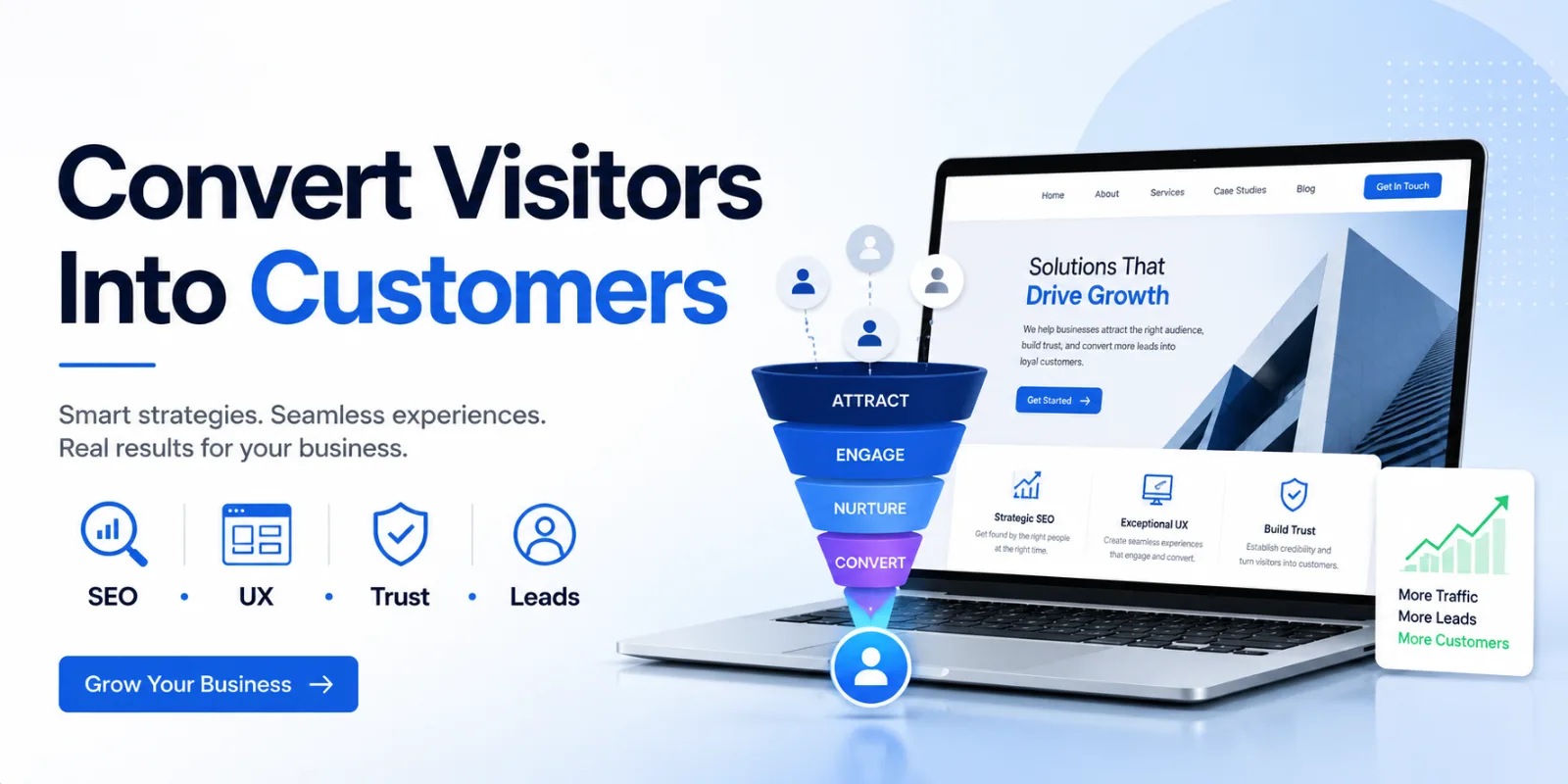
Your website is more than just an online presence—it's your most powerful digital salesperson. Whether you're a startup, a growing business, or an established enterprise, your website should do more than showcase your services. It should attract visitors, build trust, answer their questions, and encourage them to take action.

Many businesses invest in beautiful websites but fail to generate leads because they overlook the factors that influence customer decisions. A high-converting website combines strategic design, compelling content, fast performance, and a seamless user experience to guide visitors toward becoming customers.

In this guide, you'll learn the essential steps to build a business website that not only looks professional but also delivers measurable business results.

What Is a High-Converting Business Website?

A high-converting business website is designed to encourage visitors to complete a specific action, such as:

  • Requesting a quote
  • Booking a consultation
  • Filling out a contact form
  • Calling your business
  • Downloading a brochure
  • Purchasing a product
  • Scheduling a demo

Instead of focusing only on appearance, a conversion-focused website prioritizes user needs, trust, and clear communication.

Why Website Conversions Matter

Driving traffic to your website is only half the job. If visitors leave without contacting you or taking action, you're losing valuable business opportunities.

Imagine your website receives 5,000 visitors each month.

  • At a 1% conversion rate, you'll generate 50 leads.
  • At a 3% conversion rate, you'll generate 150 leads.

That's three times more business without increasing your marketing budget.

Improving your conversion rate is often one of the most cost-effective ways to grow your business.

Step 1: Understand Your Target Audience

Before building your website, identify your ideal customer.

Ask yourself:

  • Who are they?
  • What challenges do they face?
  • What solutions are they searching for?
  • What questions do they ask before making a decision?

When your website speaks directly to customer needs, visitors are more likely to trust your business and take the next step.

Step 2: Create a Strong Value Proposition

Your homepage should immediately answer these questions:

  • What does your business do?
  • Who do you help?
  • Why should customers choose you?
  • What makes your services different?

Weak Message

"We provide innovative digital solutions."

Better Message

"We help startups and businesses build high-performance websites, mobile apps, and AI-powered software that drive growth and improve customer experiences."

Visitors should understand your value within the first few seconds.

Step 3: Choose the Right Website Platform

Selecting the right technology impacts performance, security, and scalability.

Popular choices include:

  • Next.js
  • React
  • WordPress
  • Shopify
  • Laravel
  • Headless CMS

Choose a platform based on your business goals rather than current trends.

For businesses expecting long-term growth, scalable frameworks like Next.js offer excellent performance and SEO benefits.

Step 4: Design a Clean and Professional User Interface

A cluttered website confuses visitors.

Good website design should include:

  • Simple navigation
  • Clear page hierarchy
  • Consistent branding
  • Professional typography
  • High-quality images
  • Plenty of white space

Every page should help visitors find information quickly.

Step 5: Improve Website Speed

Website speed directly affects user experience and search engine rankings.

Ways to improve speed:

  • Compress images
  • Use WebP images
  • Enable browser caching
  • Minify CSS and JavaScript
  • Use a CDN
  • Optimize fonts
  • Reduce unnecessary plugins

A fast-loading website keeps visitors engaged and improves conversions.

Step 6: Optimize for Mobile Users

Most visitors browse using smartphones.

A mobile-friendly website should:

  • Adapt to all screen sizes
  • Display readable text
  • Have clickable buttons
  • Load quickly
  • Offer smooth navigation

Google also prioritizes mobile-friendly websites.

Step 7: Write Content That Solves Problems

Visitors care about solving problems—not reading about your company.

Explain:

  • How your services help
  • What problems you solve
  • What results customers can expect
  • Why your solution is the best choice

Focus on benefits instead of features.

Step 8: Build Trust with Social Proof

People trust businesses that others recommend.

Include:

  • Customer testimonials
  • Client reviews
  • Success stories
  • Portfolio
  • Case studies
  • Certifications
  • Awards
  • Partner logos

Trust signals increase confidence and improve conversions.

Step 9: Create Dedicated Service Pages

Instead of listing every service on one page, create individual pages.

Examples:

  • Website Development
  • Mobile App Development
  • AI Development
  • UI/UX Design
  • Custom Software Development

Each page should include:

  • Service overview
  • Benefits
  • Development process
  • Technologies used
  • FAQs
  • Contact CTA

Dedicated pages improve SEO while generating more qualified leads.

Step 10: Use Clear Calls-to-Action

Every page should encourage visitors to take action.

Examples:

  • Request a Free Consultation
  • Get a Custom Quote
  • Schedule a Demo
  • Contact Our Experts
  • Start Your Project

Place CTAs:

  • Above the fold
  • After key sections
  • At the end of every page
  • In your navigation menu

Avoid generic buttons like "Click Here."

Step 11: Optimize Every Page for SEO

A great website is useless if potential customers cannot find it.

Best practices include:

Use Relevant Keywords

Include your primary keyword naturally in:

  • Title
  • URL
  • H1
  • First paragraph
  • Meta description
  • Image alt text
  • Subheadings

Publish Helpful Content

Examples:

  • Website Development Cost in India
  • Why Every Business Needs a Professional Website
  • Next.js vs WordPress
  • Common Website Design Mistakes

Educational content builds trust and attracts organic traffic.

Use Internal Links

Connect related pages naturally.

Example:

Homepage → Services → Portfolio → Blog → Contact

Step 12: Add Lead Generation Features

Make it easy for visitors to contact your business.

Useful features include:

  • Contact forms
  • Live chat
  • WhatsApp integration
  • Appointment booking
  • Newsletter signup
  • Free consultation request

Reducing friction increases conversions.

Step 13: Use Analytics to Improve Performance

Monitor:

  • Website traffic
  • Bounce rate
  • Conversion rate
  • Form submissions
  • Most visited pages
  • Traffic sources

Data helps identify opportunities for continuous improvement.

Common Mistakes That Reduce Website Conversions

Avoid:

  • Slow loading pages
  • Confusing navigation
  • Weak headlines
  • Poor mobile experience
  • Outdated design
  • Missing trust signals
  • Generic content
  • Broken contact forms
  • Too many pop-ups
  • No clear CTA

Regular website audits help identify and fix these issues.

Future-Proof Your Website

Search behavior is evolving rapidly.

To stay competitive:

  • Publish original content regularly.
  • Answer customer questions clearly.
  • Build detailed service pages.
  • Add FAQs.
  • Keep information updated.
  • Use structured data (Schema).
  • Publish real case studies.

A website built around user needs will perform better in both traditional search engines and AI-powered search.

Why Choose MYST International?

At MYST International, we build websites that combine exceptional design with measurable business results.

Our services include:

  • Custom Website Development
  • Next.js Development
  • React Development
  • UI/UX Design
  • SEO Optimization
  • Website Speed Optimization
  • AI Integration
  • Website Maintenance

Every website we build is designed to attract visitors, build trust, and generate qualified leads.

Related Articles

  • Why Every Business Needs a Professional Website
  • Website Development Cost in India
  • Next.js vs WordPress
  • AI-Powered Automation for Businesses
  • What Is Agentic AI?

Frequently Asked Questions

What makes a business website successful?

A successful website combines professional design, fast performance, clear messaging, SEO, trust signals, and strong calls-to-action.

How important is website speed?

Website speed directly affects user experience, search rankings, and conversions.

Should every business invest in SEO?

Yes. SEO helps businesses attract qualified traffic and generate long-term organic leads.

How often should a website be updated?

Update your website regularly with new content, services, case studies, and blog articles.

Can an existing website be improved instead of rebuilding it?

Absolutely. Many websites achieve significantly better results through improvements to design, speed, content, SEO, and conversion optimization.

Final Thoughts

A business website should do much more than present information—it should actively help your business grow. By understanding your audience, creating a strong value proposition, optimizing for search engines, building trust, and making it easy for visitors to take action, you can transform your website into a reliable source of leads and sales.

Whether you're launching a new website or improving an existing one, focusing on user experience, performance, and valuable content will deliver long-term results. If you're looking to build a website that not only looks professional but also converts visitors into customers, MYST International is ready to help.

Frequently Asked Questions

What makes a business website successful?+

A successful website combines professional design, fast performance, clear messaging, SEO, trust signals, and strong calls-to-action to guide visitors toward becoming customers.

How important is website speed?+

Website speed directly impacts user experience, search rankings, and conversions. Faster websites reduce bounce rates and improve engagement.

Should every business invest in SEO?+

Yes. SEO helps potential customers discover your business through search engines, increasing organic traffic and generating qualified leads.

How often should a business website be updated?+

Businesses should regularly update their websites with fresh content, new case studies, updated services, and blog posts to remain competitive.

Can an existing website be improved instead of rebuilding it?+

Yes. Many businesses improve conversions by optimizing design, speed, content, SEO, and user experience without rebuilding the entire website.